Guide to Different Color Spaces in Photography and Video: Which to Use in 2025?

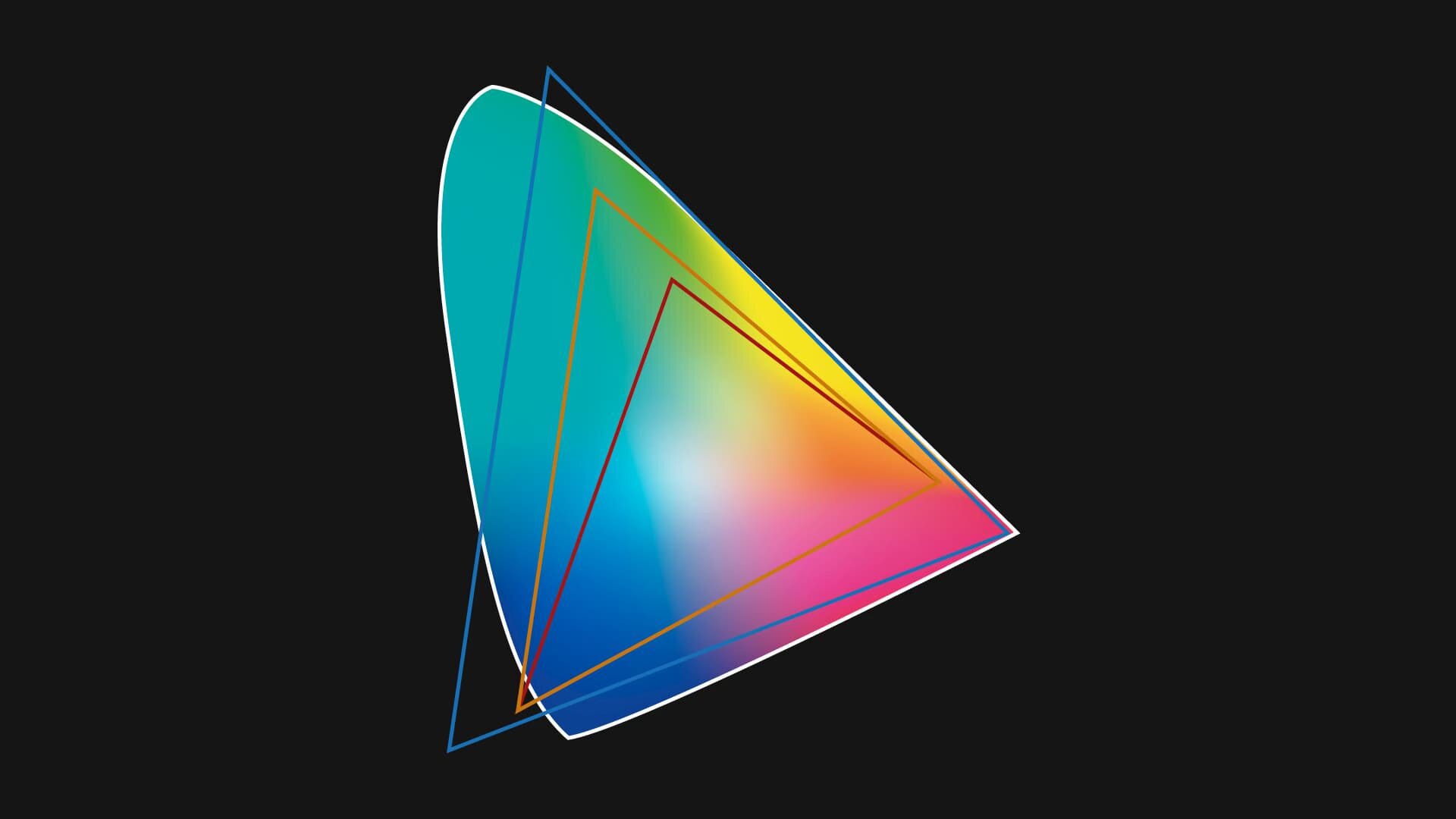
Color spaces are a fundamental aspect of photography and video production, influencing image quality and color fidelity. In 2025, technology continues to evolve, bringing new choices for the most suitable color spaces for different needs. This guide explores the main color spaces, their uses, and the best options for current photography and video work.
What is a color space?
A color space defines a specific range of colors that can be represented in a digital image. It maps colors within a particular model, such as RGB or CMYK, and varies in terms of gamut and accuracy.
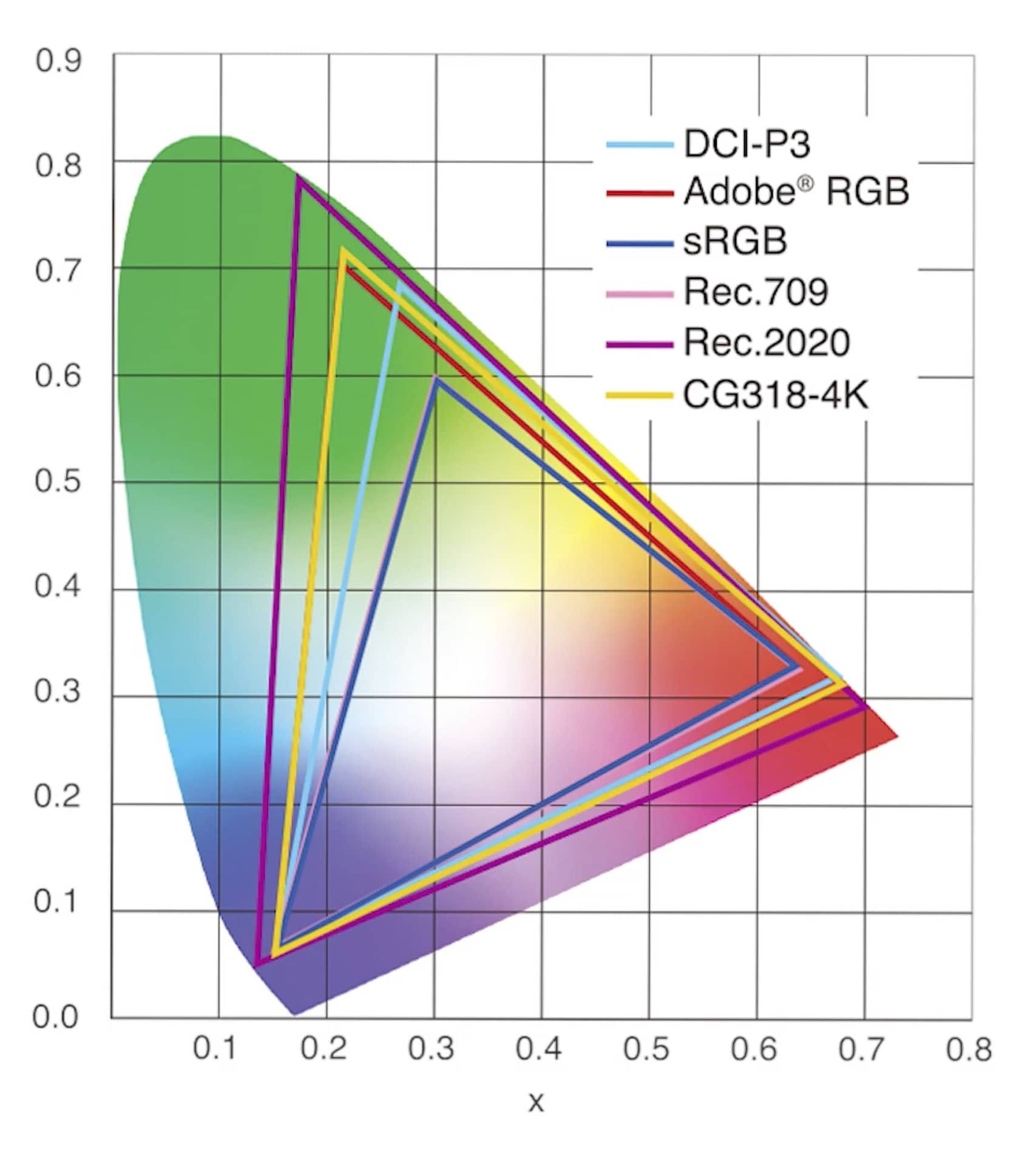
The main color spaces in 2025
sRGB – The most common
Ideal for web and online sharing
Limited color gamut but a universal standard.
Perfect for images intended for monitors, social media, and websites.
Limited for professional printing and advanced editing.
Adobe RGB – For professional photographers
Ideal for high-end printing and photography
Contains a wider color gamut than sRGB.
Great for post-production and professional printing.
Requires a compatible monitor for proper visualization.
ProPhoto RGB – The ultimate color gamut
Ideal for advanced photographers and fine art printing
Has a wider color gamut than Adobe RGB.
Supports colors not visible on standard screens but useful during processing.
Requires careful color management to avoid clipping and distortions.
Rec.709 – The HDTV video standard
Ideal for video production for TV and web
Standard for HD video content.
Similar color gamut to sRGB, making it narrower than Adobe RGB or Rec.2020.
DCI-P3 – The future of cinematic color spaces
Ideal for digital cinema and HDR displays
Wider color gamut than sRGB and Rec.709.
Used in modern monitors, TVs, and Apple devices.
Standard in the digital cinema industry.
Rec.2020 – The new standard for 4K and 8K
Ideal for future-proof video productions
Contains a very wide color gamut.
Requires advanced monitors and software to be fully utilized.
Not yet fully supported by all consumer devices.
ACES – The universal system for color science
Ideal for high-end cinematic productions
A color space managed by the Academy of Motion Picture Arts and Sciences.
Designed for advanced workflows in the video industry.
Not intended for common photographic use.
CMYK – The standard for printing
Ideal for offset and typographic printing
Uses four inks (Cyan, Magenta, Yellow, and Black) to create printable images.
A subtractive color space with a more limited gamut than RGB spaces.
It is crucial to correctly convert images from RGB to CMYK for printing to avoid unexpected color shifts.
Common profiles include ISO Coated v2, US Web Coated (SWOP), and FOGRA39..
Why do cameras allow selecting sRGB or Adobe RGB?
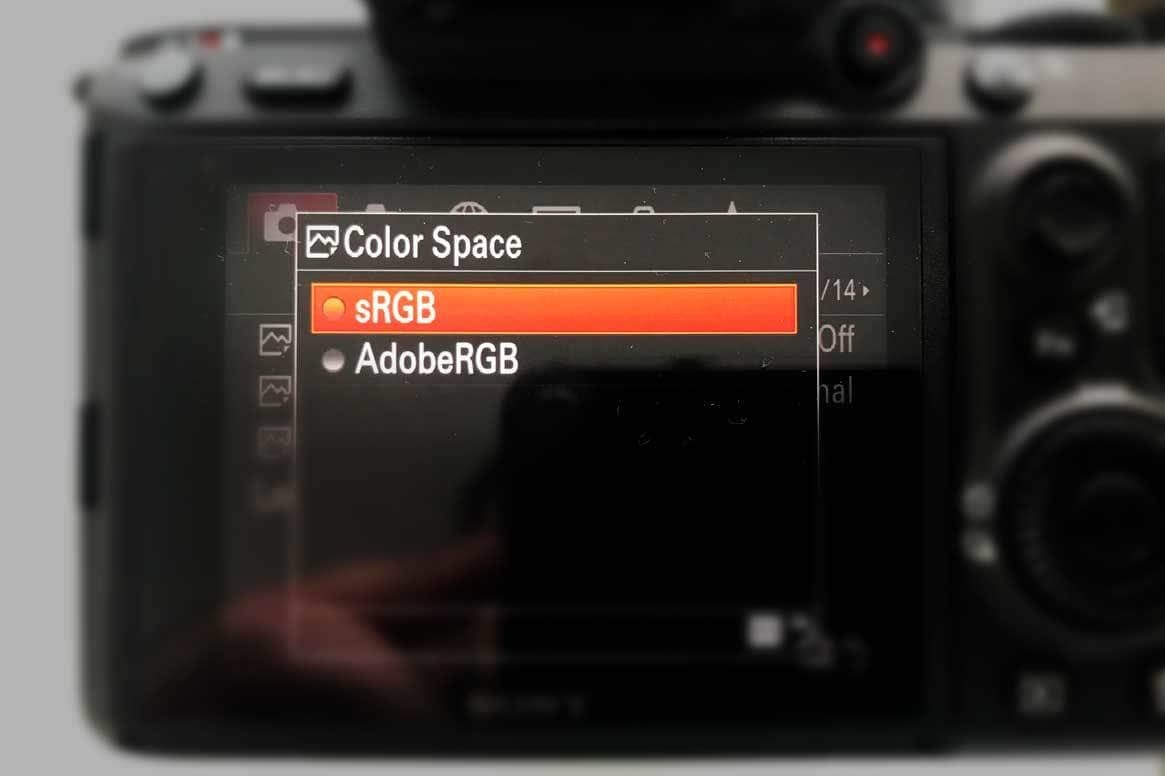
Many digital cameras let you choose between sRGB and Adobe RGB when shooting in JPEG format. This choice affects how colors are recorded and represented in the final images.
Adobe RGB offers a wider color gamut and is useful for those planning to edit images in post-production or print with more accurate color reproduction.
sRGB is the universal standard for digital devices and the web. It is the best choice if images need to be used without advanced processing or published directly online.
Note: If shooting in RAW, the camera's color space selection does not affect the captured data, as the color space will be decided later in post-production.
Conclusion
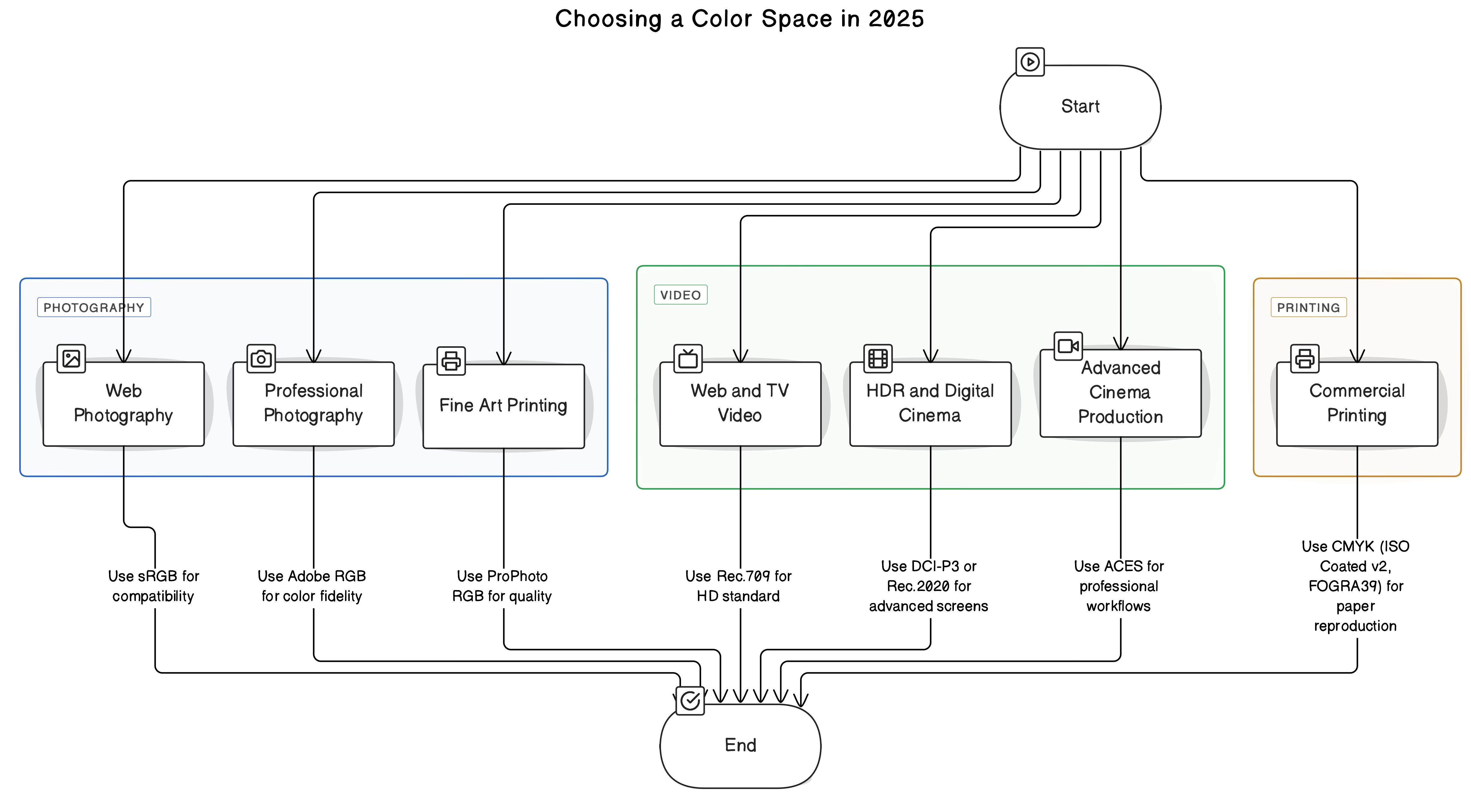
In 2025, choosing the right color space depends on your workflow and the final purpose of your images or videos. If you primarily work for the web, sRGB remains the safest choice. For printing, Adobe RGB or ProPhoto RGB offer significant advantages. In video, DCI-P3 and Rec.2020 are becoming increasingly important with the rise of 4K, 8K, and HDR. For printing, CMYK remains the essential standard, with specific profiles needed to achieve the best results.
The post Guida ai Diversi Spazi Colore in Fotografia e Video: Quali Usare nel 2025? first appeared on Andrea Passerini.